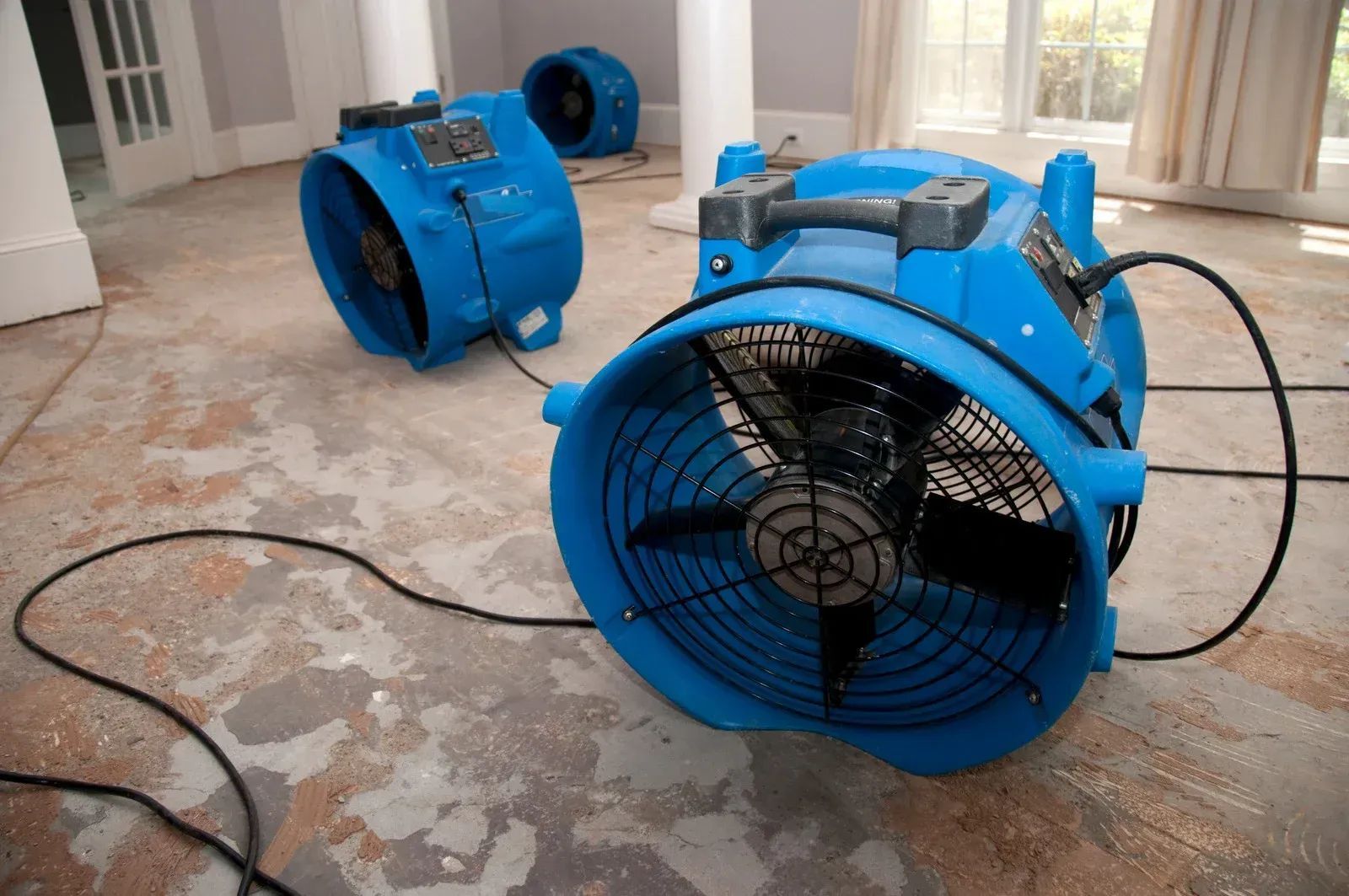
Musty Smell in Your House That Won't Go Away? What It's Telling You
QUICK ANSWER: A musty smell that lingers after cleaning is almost never just an odor problem. It is a sign that moisture has settled somewhere in the home long enough for mold to start feeding on paper, wood, or dust, releasing the compounds you are actually smelling. The source is often hidden: a slow leak inside a wall, damp carpet padding, a crawlspace, or an HVAC system moving air across a wet coil. Air fresheners and cleaning cover the smell for a day or two and then it returns, because nothing was corrected at the source. Finding it usually takes moisture meters, thermal imaging, and a look inside spaces most homeowners cannot easily reach.
You clean the room, run a candle for a few days, open the windows when the weather allows it, and for a while the house smells fine. Then the air turns again, usually in the same closet or the same corner of the basement, and you are back where you started. That pattern, smell fades, smell returns, is the detail that matters most. A single musty smell after a rainy week is normal. A smell that keeps coming back in the same spot means something is staying wet in a place you cannot see, and cleaning the surface was never going to fix it.
Cobb County homes deal with this more than most. Georgia summers push outdoor humidity into the home through doors, vents, and small gaps in the envelope, and older houses in particular were built before modern vapor barriers and sealed crawlspaces were standard. A closet that smells fine in February can turn musty by July for no reason anyone can point to, because the air itself has changed even if nothing leaked.
What That Smell Actually Is
The odor is not mold itself. Mold spores have no scent on their own. What you are smelling are microbial volatile organic compounds, gases released as mold and mildew break down the organic material they are feeding on: paper facing on drywall, wood framing, dust, cardboard, or the backing on carpet. Those compounds are light enough to travel through a house on normal air movement, which is why the smell can seem to come from everywhere even when the actual growth is confined to one wall cavity or one section of subfloor.
That also explains why the smell shows up before any staining or visible growth does. Active feeding starts producing odor almost immediately, while a colony large enough to see or a water stain dark enough to notice can take considerably longer to develop. By the time you can see it, the smell has usually been trying to tell you something for weeks.
The Usual Sources Behind a Musty House
Most musty odors trace back to one of a small number of repeat offenders. Working through them in order is a faster path to the answer than guessing.
A Leak No One Has Found Yet
Supply lines behind sinks, dishwasher connections, refrigerators, and pipes inside walls can drip slowly for months. Water may absorb into subfloors or drywall instead of pooling visibly, creating persistent moisture that supports mold without obvious warning signs.
Carpet Padding That Never Fully Dried
Spills, pet accidents, or stormwater can soak carpet padding and remain trapped beneath the surface. Carpet prevents evaporation, allowing padding to stay damp even when the carpet feels dry, creating conditions where mold can develop underneath.
Crawlspace And Basement Moisture
Ground-contact areas can draw moisture through concrete, vents, and gaps around pipes or wiring. Damp air may rise into living spaces through the stack effect, carrying musty odors upstairs even when no standing water is visible below.
An HVAC System Working Against You
A clogged condensate drain, dirty coil, or ductwork running through a damp crawlspace can spread musty air throughout the home. If odors appear or disappear with thermostat cycles, inspect the HVAC system before assuming another source.
A Roof Doing Its Job Poorly
A small roof leak can saturate attic insulation and ceiling drywall before stains appear below. Because insulation holds moisture, affected areas may remain wet for weeks, creating conditions for mold while providing little visible evidence inside.
Georgia's Humidity Swings
Heavy rain followed by hot, humid weather can raise indoor moisture without any plumbing leak. Closets, poorly ventilated corners, and shaded rooms often show problems first because stagnant air holds moisture longer than consistently circulating air.
Why the Smell Can Show Up With No Mold in Sight
This is the part that frustrates most homeowners. You look in the closet, behind the furniture, under the sink, and everything appears clean. That does not mean the odor is imaginary. Mold growing behind drywall, under flooring, inside wall insulation, or inside ductwork produces the same odor as mold you can see, and in a lot of cases it produces more of it, because the enclosed space traps the compounds instead of letting them disperse.
A room can genuinely look spotless and still be the source, which is why chasing the smell by eye rarely works. The growth is doing exactly what it needs a cavity, a moisture source, and an organic surface to feed on, and none of those three things has to be visible from the room you are standing in.
TIP: A basic hygrometer, sold at most hardware stores, is worth keeping in a musty room. Indoor humidity above 60 percent gives mold what it needs to keep growing, while a range between 30 and 50 percent makes it much harder for growth to continue. If a room consistently reads high even with the rest of the house comfortable, that room is where the moisture problem lives.
How the Source Actually Gets Found
Tracking down a hidden moisture source is less about guessing and more about a process of elimination that most homeowners are not equipped to run on their own. Certified technicians start with moisture meters, checking suspect areas like baseboards, subfloor near exterior walls, and drywall around plumbing to find readings that are higher than the surrounding material. Thermal imaging adds another layer, picking up the temperature differences that damp materials create even when nothing is visibly wet, which is often how a leak inside a wall gets located without opening every section of drywall to look.
From there, the investigation moves into the spaces a homeowner typically cannot access easily: the attic, the crawlspace, and the HVAC system, including the condensate line and the ductwork itself. Grading and drainage around the foundation get checked too, since water pooling against the house is a common reason a crawlspace or basement stays damp no matter how many times it gets aired out. When the visible and thermal evidence points to active growth, sampling can confirm what is there and how far it has spread before any work begins.
What Correcting It Involves
Finding the moisture is only the first half of the job. Once the source is confirmed, the space gets isolated with sealed barriers and negative air pressure so spores already circulating do not spread to the rest of the home while work happens. Materials that have absorbed contamination, drywall, insulation, carpet, and trim in the affected area, come out rather than get cleaned in place, because porous materials hold spores at a level that surface cleaning cannot reach.
HEPA vacuuming and air scrubbing follow, capturing spores that settled on surfaces well beyond the visible growth, and remaining structural surfaces get treated to discourage regrowth before anything closes back up. None of that holds if the original moisture source is still active, which is why correcting the leak, the drainage issue, or the ventilation problem is treated as part of the same job rather than a separate step. A remediation that removes the mold but leaves the water source in place is a job that gets repeated within a year.
Keeping It From Coming Back
Prevention comes down to two things: keeping materials dry when something does happen, and keeping ambient humidity in a range mold cannot use. Water that gets dried within roughly 24 to 48 hours of a leak or spill rarely has time to support growth, so a fast response to any water event matters more than almost anything else on this list. Beyond that, clean gutters and grading that moves water away from the foundation keep ground moisture from working its way into crawlspaces and basements in the first place.
Inside the house, running exhaust fans in bathrooms and kitchens, keeping the AC condensate line clear, and venting dryers and other appliances to the outside all reduce the moisture load the HVAC system has to manage. In a Cobb County summer, a dehumidifier in a chronically damp basement or crawlspace can do more to prevent a repeat smell than any amount of cleaning ever will.
Frequently Asked Questions
Can a musty smell go away on its own without finding the source?
Rarely. If it fades, it returns once humidity rises. The smell reflects active feeding, which continues while moisture and organic material exist. Without correcting the source, underlying conditions stay unchanged even when odor weakens temporarily.
Is a musty smell always a sign of mold?
Not always, but mold is most common. Damp fabric, standing water, or pet areas produce similar odors without active growth. Treat any persistent musty smell as a moisture problem worth investigating, regardless of visible mold.
Why does the smell get worse in humid weather?
Higher humidity increases moisture availability for mold and helps microbial compounds travel through air. A source producing faint odor during dry months can smell noticeably stronger during humid stretches, even though underlying growth remains unchanged.
Can air purifiers or air fresheners fix a musty smell?
They mask it temporarily but neither addresses moisture and growth. Air fresheners add scent on top of the issue. Most air purifiers cannot remove mVOCs hidden sources produce. The smell returns when products wear off.
How long does it usually take to track down a hidden mold source?
Inspection time varies by house size and suspect areas, but moisture meters and thermal imaging typically narrow the source down in one visit. Confirming extent takes longer if growth spread across multiple cavities or systems.
Should I try to find the source myself before calling for an inspection?
Check obvious spots under sinks, around windows, and near plumbing first. Opening walls without knowing moisture location risks spreading spores and damage. A targeted inspection finds the source with less disruption than trial and error.
The Smell Stops When the Moisture Does
A persistent musty odor is your house telling you something is wrong. Moisture and mold are active right now inside walls and under floors, feeding on wood and drywall. That smell reflects compounds being released as growth spreads through hidden spaces. Ignoring it wastes time while the problem reaches materials that cost far more to fix later. The source can be found with the right investigation and corrected before damage becomes expensive.
After 15
years serving Kennesaw, GA, Angel's Renovations Company
has found that a musty smell is rarely just a cleaning problem. It is always a moisture issue requiring diagnosis and proper correction. Tools that locate hidden sources turn an invisible problem into one you can address. Once the moisture source is fixed and materials restored, the smell that kept returning stops. A home that stays dry smells clean on its own.